
Perception Before Product

When Product Outgrows Perception
This proposition was built on a simple observation: the product was already there, but the perception wasn’t.
Riigid had a strong foundation — a well-made, premium suitcase designed for performance and durability. However, the branding surrounding the product felt disconnected. It lacked the structure and clarity required to match the quality of what was being sold.
In markets like travel goods, this gap is critical. When the visual identity does not align with the product, customers hesitate. Not because the product is poor, but because the brand fails to communicate confidence at first glance.

Designing With Intent, Not Decoration
The name Riigid naturally lends itself to a sharp, structured aesthetic. It suggests durability, strength, and form — characteristics that should be visually reinforced, not ignored.
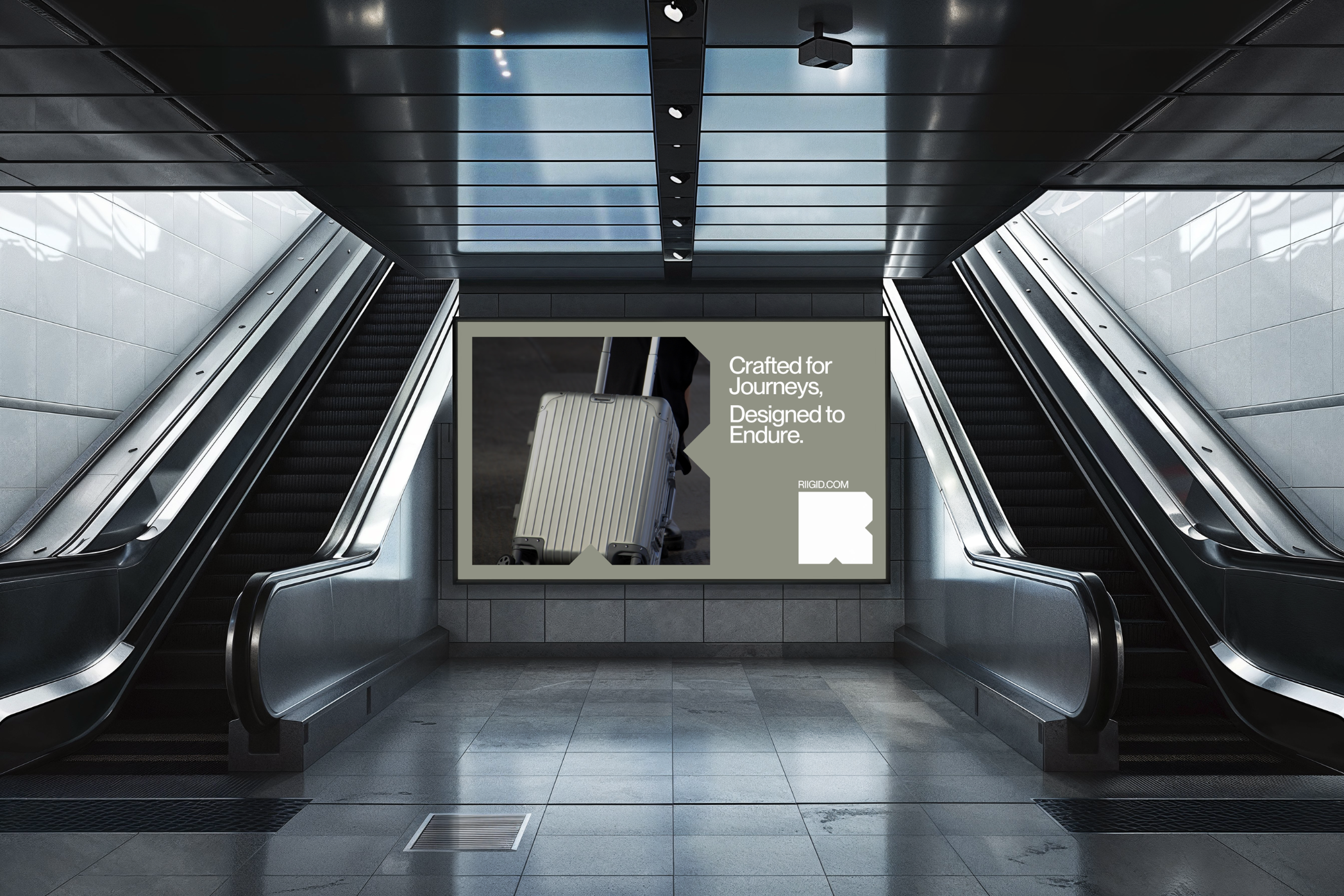
The direction was therefore clear: create a system that reflects the product itself. Boxy, defined, and precise. A wordmark that carries weight, but remains legible and accessible to new customers.
The original identity, built using simple tools, did not support this vision. For a brand operating at a multiple six-figure monthly level, this becomes a limitation. Branding at that stage is no longer about having something in place — it is about ensuring every element contributes to perceived value.
The goal was not to redesign for the sake of change, but to elevate the brand into alignment with its own product.

Showing What the Brand Could Become
Although we didn’t move forward with a full partnership, the proposal demonstrated a clear transformation.
From a simple, undefined presence to a structured, premium identity system that immediately feels more intentional. The difference is visible within seconds. Typography becomes sharper, spacing becomes deliberate, and the overall brand begins to communicate trust without needing explanation.
This is the power of perception. Nothing about the physical product changed, yet the brand instantly feels more valuable, more established, and more competitive.

The Reality Across Every Industry
This principle extends far beyond luggage or travel brands.
Every customer, in every market, makes immediate judgments based on what they see. Before reading a product description, before comparing features, before even understanding pricing — they decide whether a brand feels credible.
This happens in seconds.
If the brand looks structured, clear, and intentional, trust is built instantly. If it looks inconsistent or underdeveloped, doubt follows just as quickly.
Most businesses do not lose customers because of their product. They lose them because the perception of the product is not strong enough to justify attention.
Why Elevation Is Not Optional
Improving branding is often viewed as an aesthetic upgrade, but in reality, it is a commercial decision.
The way a brand looks directly influences how it is valued, how it is trusted, and ultimately how it performs. Small shifts in typography, layout, and structure can significantly impact how customers move through a website, how confident they feel, and whether they choose to purchase.
Riigid is just one example of this. The product was already strong — the opportunity was in how it was presented.
And this applies to any brand operating today. If your product is good, but your presence does not reflect it, you are leaving growth on the table.

Engineering Perception
At Matelier, branding is not treated as surface-level design. It is built as a system — one that aligns product, perception, and performance into a single, cohesive structure.
Because in the end, customers don’t experience your product first.
They experience how it looks.